LinkedIn Marketing in Kenya: Proven B2B Strategies to Attract and Win High-Value Clients.
LinkedIn marketing in Kenya has become the most powerful channel for B2B companies to connect with decision-makers, build authority, and generate qualified leads. This guide covers proven strategies, including profile optimization, content creation, lead generation tactics, and LinkedIn advertising specifically tailored for the Kenyan market. Companies using LinkedIn strategically report 3-5x higher quality leads compared to other platforms.
You still think social media marketing is not necessary for B2B businesses in Kenya? This guide will show you why every B2B company in Kenya should take social media marketing seriously.
Why LinkedIn Marketing in Kenya Is Different from Other Platforms
Imagine you’re selling enterprise accounting software. On Facebook, you’re competing with baby photos and vacation updates. On Instagram, you’re surrounded by fashion and food content. But on LinkedIn? You’re in a room full of CFOs, finance managers, and business owners actively looking for solutions like yours.
LinkedIn has over 5.4 million users in Kenya as of 2025, according to Datareportal. More importantly, 80% of B2B leads generated through social media come from LinkedIn, based on research published by the Content Marketing Institute in 2024.
Here’s why LinkedIn marketing for businesses in Kenya works so well:
- Decision-makers are actually there. The purchasing manager at Safaricom, the operations director at Kenya Airways, and the procurement head at your target client are all on LinkedIn. They’re not just scrolling, they’re researching vendors, reading industry insights and evaluating potential partners.
- The platform rewards expertise. Unlike other social networks that prioritize entertainment, LinkedIn’s algorithm favors valuable professional content. When you share genuine insights about supply chain optimization or HR tech solutions, the right people see it.
- It builds trust before the first call. A well-maintained LinkedIn presence acts as your 24/7 credibility machine. Before a prospect even responds to your outreach, they’ve already checked your profile, read your articles, and formed an opinion about your expertise.
How Top Kenyan Companies Win on LinkedIn
Let me share what separates companies that struggle on LinkedIn from those generating consistent B2B leads.
The Foundation- Your LinkedIn Business Page
Think of your LinkedIn business page as your digital office in Nairobi’s Westlands business district. Would you invite clients to a messy, unprofessional space? Your LinkedIn presence deserves the same attention.
Start with these essentials for LinkedIn business page optimization in Kenya:
Your banner image should immediately communicate what you do. A construction equipment company might show a completed infrastructure project with the Nairobi skyline. A consulting firm could display their team collaborating with recognizable Kenyan brands.
Your “About” section needs to answer one question within the first two sentences: “Why should a Kenyan business care?” Forget the mission statement jargon. Try something like: “We help Kenyan manufacturers reduce operational costs by 30% through smart inventory management systems.”
Content That Actually Converts
Here’s where most Kenyan companies get LinkedIn marketing wrong. They treat it like a billboard, just posting product features and hoping someone bites.
The LinkedIn content strategy in Kenya that works follows a simple principle: teach before you sell.
Use the 60-30-10 Rule for B2B LinkedIn Strategy.
60% of your content should educate your audience. Share industry insights, explain complex topics in simple terms and offer genuine value. A cloud services provider might post: “5 signs your Kenyan business has outgrown shared hosting” with practical indicators and solutions.
30% should showcase your expertise through case studies, client results and behind-the-scenes looks at how you solve problems. Real numbers matter. “We helped a Mombasa retailer process 40% more transactions during peak season” is stronger than “We provide reliable POS systems.”
10% can directly promote your services. After consistently providing value, your audience will welcome learning about your offerings.
Content formats that perform well in Kenya.
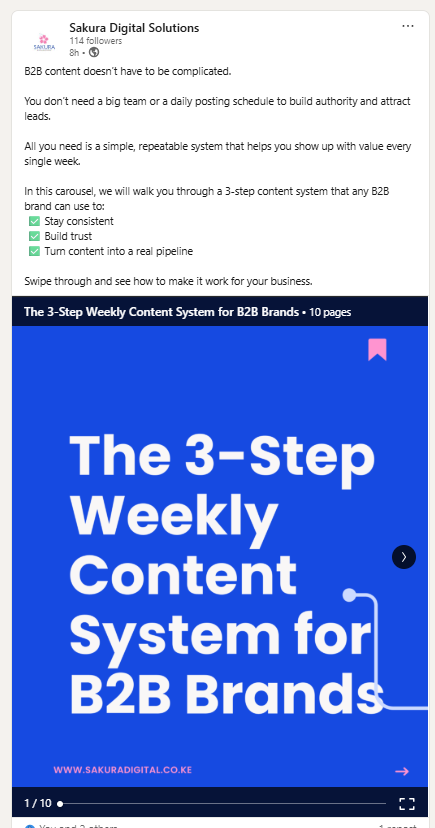
- Carousel posts explaining step-by-step processes outperform simple text posts by a factor of three, according to LinkedIn’s internal data from 2024. A HR consultancy might create a carousel titled “How to Structure Performance Reviews in Kenya’s Hybrid Work Environment.”
- Short videos (under 90 seconds) showing real solutions to real problems generate high engagement. An industrial equipment supplier could film a 60-second clip explaining proper generator maintenance during Kenya’s dry season.
- Polls and questions spark conversations. “What’s your biggest challenge with employee retention in Nairobi?” invites engagement and provides valuable market research.
The Personal Touch of Employee Advocacy
Here’s something that might surprise you. Posts from personal profiles get 561% more reach than company page posts.
Smart Kenyan companies implement employee advocacy programs. Your sales director, technical lead, and customer success manager all have networks full of potential clients. When they share company content with their authentic voice, magic happens.
If you need professional help in making your company win on LinkedIn, check out our social media marketing services.
LinkedIn Lead Generation in Kenya. From Connection to Conversion.
Building your presence is step one. Converting that presence into actual business requires a systematic approach to LinkedIn lead generation in Kenya.
Smart Outreach That Doesn’t Feel Like Spam
Let’s address the elephant in the room. Most LinkedIn outreach in Kenya is terrible. We’ve all received those copy-paste messages: “Dear Sir/Madam, I hope this finds you well. I would like to introduce our company…”
Delete.
Here’s the approach that actually works:
Step 1: Research your prospect. Before sending any message, spend three minutes learning about them. Read their recent posts, check their company’s latest news and find genuine common ground.
Step 2: Connect without pitching. Your connection request note should feel like a natural introduction. “Hi Ouko, I noticed your insights on digital transformation in Kenyan banks. I’ve been working on similar challenges with financial institutions. Would love to connect and exchange ideas.”
Step 3: Start conversations, not sales pitches. After connecting, don’t immediately pitch. Engage with their content. Share something relevant. Build a relationship.
Step 4: Offer value first. When you do reach out, lead with value. “I saw your post about challenges with remote team management. We recently published research on what’s working for Kenyan companies. Would you find it useful if I shared it?”
LinkedIn Sales Navigator: Worth the Investment?
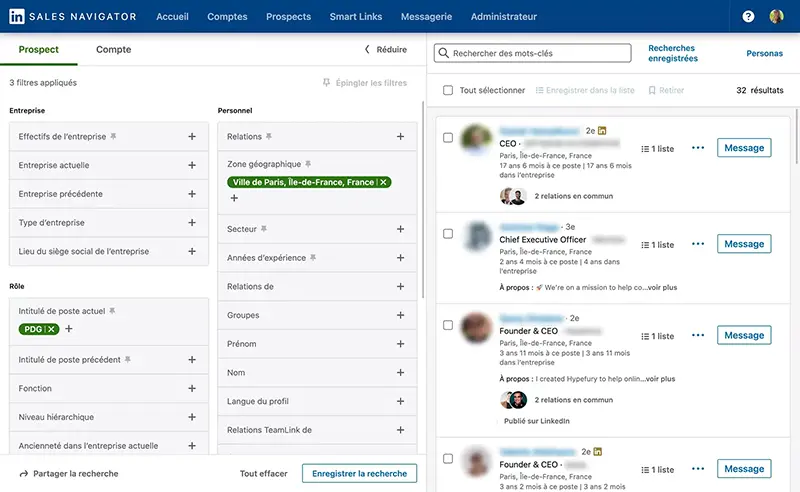
For serious B2B marketing in Kenya, LinkedIn Sales Navigator pays for itself quickly. The premium tool costs around KES 10,000 monthly but offers targeting capabilities that make traditional prospecting look like searching for a needle in a haystack.
You can filter prospects by company size, industry, job title and even signals like “changed jobs in the past 90 days” or “posted on LinkedIn in the past 30 days.” For a company targeting HR directors at firms with 100+ employees in Nairobi, this precision is invaluable.
Sales Navigator also shows you warm introduction paths. Discover that your existing client’s procurement head is connected to your dream prospect’s CEO? That’s your opening.
LinkedIn Advertising in Kenya
When organic reach isn’t enough, LinkedIn advertising in Kenya offers targeting that other platforms simply cannot match.
Why LinkedIn Ads Cost More (And Why They’re Worth It)
Yes, LinkedIn ads are expensive compared to Facebook. A single click might cost KES 500-1800 versus KES 20-100 on Facebook. But here’s what matters: LinkedIn delivers decision-makers, not casual scrollers.
A B2B software company spent KES 350,000 on Facebook ads and got 500 leads. Sounds great until you realize only 12 were remotely qualified. They spent the same amount on LinkedIn ads, got 87 leads, and 43 were decision-makers at target companies. They closed 8 deals within three months.
Quality trumps quantity every single time in B2B marketing.
Campaign Types That Work for Kenyan B2B Companies
1) Sponsored Content works beautifully for thought leadership. Promote your best educational posts to reach beyond your existing network. A construction management software company can promote a detailed guide on “A Contractor’s Checklist on Kenya’s Building Regulations 2025”
2) Sponsored InMail (now called Message Ads) delivers your message directly to prospects’ LinkedIn inboxes. The key is personalization and value. A professional services firm can send personalized InMails to CFOs at mid-sized Kenyan companies, offering a free financial health assessment.
3) Lead Gen Forms remove friction from the conversion process. When someone clicks your ad, LinkedIn pre-fills their information. A cybersecurity company can use Lead Gen Forms to promote a webinar. Instead of sending people to an external landing page (where 60% would drop off), they can collect registrations directly.
Targeting Strategies for the Kenyan Market
Kenya’s LinkedIn audience requires thoughtful targeting. Don’t just select “Kenya” and blast your ads to everyone.
Layer your targeting:
- Location- Nairobi, Mombasa, Kisumu (wherever your ideal clients operate)
- Job titles- Be specific. “CEO” is too broad. “CEO at companies with 50-200 employees” is better.
- Industries- Select the 3-5 industries where your solution has proven results
- Company size- If you serve enterprises, exclude small businesses to avoid wasting budget
Use Matched Audiences to retarget website visitors and upload lists of target companies. A logistics software company can upload a list of 200 target manufacturing companies in Kenya. Their ads most likely will only show to decision-makers at those specific firms, lowering the cost per qualified lead.
Common Mistakes Kenyan Companies Make on LinkedIn (And How to Avoid Them)
After reviewing hundreds of Kenyan LinkedIn profiles and campaigns, these mistakes appear repeatedly:
Mistake 1: Treating LinkedIn Like Facebook
LinkedIn users are in a professional mindset. The casual, entertainment-focused content that works on Facebook falls flat here. Save the humor and trending audio for Instagram. On LinkedIn, provide substance.
Mistake 2: Inconsistent Posting
Posting three times in one week, then disappearing for a month, destroys momentum. LinkedIn’s algorithm rewards consistency. Two valuable posts per week beats ten mediocre posts one month and nothing the next.
Mistake 3: Ignoring Engagement
Publishing content without responding to comments is like hosting a networking event and hiding in the corner. Every comment is a conversation opportunity. Reply thoughtfully. Ask follow-up questions. Build relationships.
Mistake 4: Leading with the Sale
“We’re the best ERP provider in Kenya. Book a demo!” That’s not marketing. That’s desperation. Show your expertise. Demonstrate value. Let prospects conclude that you’re the solution they need.
Mistake 5: Poor Profile Optimization
Your personal LinkedIn profile matters as much as your company page. If you’re a business owner or marketing professional, prospects will check your profile before engaging. An incomplete profile with a generic headline (“CEO at Company X”) wastes the opportunity.
Use your headline to communicate value eg, “Helping Kenyan Manufacturers Cut Production Costs by 30% Through Smart Automation | Industrial IoT Expert”
Building Your LinkedIn Marketing Strategy for 2025
Let me walk you through implementing LinkedIn marketing in Kenya step by step:
Month 1: Foundation
Week 1-2: Optimize all profiles (personal and company page). Update photos, banners, descriptions and ensure consistency across all elements.
Week 3-4: Define your content pillars. What three topics position you as the expert your prospects need? For a HR tech company, this might be: remote work management, compliance with Kenyan labor laws, and employee retention strategies.
Month 2-3: Content and Community Building
Post consistently using your 60-30-10 content mix. Engage with your industry’s conversations. Comment thoughtfully on posts from prospects and peers. Join relevant LinkedIn groups where your ideal clients gather.
Start strategic connection requests. Target 10-15 ideal prospects weekly with personalized notes.
Month 4-6: Lead Generation
Begin systematic LinkedIn outreach in Kenya. Follow the research-connect-engage-offer framework.
Test LinkedIn advertising with a small budget (KES 50,000-100,000). Run A/B tests on messaging, targeting, and content formats. Scale what works.
Launch an employee advocacy program. Train 5-10 key team members on LinkedIn best practices.
Measuring Success. Metrics That Matter in LinkedIn Marketing in Kenya
Vanity metrics like follower count feel good but mean little. Focus on metrics tied to business outcomes, such as:
- Profile views and search appearances indicate your visibility is growing. If you’re not appearing in relevant searches, revisit your keywords and activity levels.
- Connection growth rate matters less than connection quality. 100 connections with decision-makers at target companies beats 1,000 random connections.
- Content engagement rate (likes, comments, shares divided by impressions) shows whether your content resonates. Aim for 3-5% for company pages, 5-10% for personal profiles.
- InMail response rate and connection acceptance rate measure how well your outreach resonates. Above 30% is excellent.
- Lead quality and conversion rate are the ultimate measures. Track how many LinkedIn-sourced leads become qualified opportunities and paying clients.
The Future of LinkedIn Marketing for Kenyan B2B Companies
As we move through 2025 towards 2026 and beyond, several trends are reshaping B2B LinkedIn strategy in Kenya:
- LinkedIn’s algorithm increasingly favors authentic, conversational content over polished corporate speak. The posts performing best feel like advice from a trusted colleague, not press releases.
- Video content continues gaining prominence. LinkedIn’s push toward short-form video creates opportunities for Kenyan businesses to showcase their expertise in engaging formats.
- AI tools are making content creation easier, but authenticity matters more than ever. Prospects can spot generic AI-generated content instantly. Use AI for research and drafts, but ensure your voice and real insights shine through.
- LinkedIn Events and LinkedIn Audio are opening new avenues for thought leadership. Hosting virtual events for your target audience positions you as the industry convener.
My Conclusions & Your Next Steps
LinkedIn marketing in Kenya isn’t complex, but it does require commitment and strategy. Start where you are. Optimize your profiles this week. Post valuable content next week. Begin strategic outreach the week after.
The Kenyan B2B companies dominating LinkedIn in 2025 aren’t necessarily the biggest or best-resourced. They’re the ones who consistently show up, provide genuine value, and build real relationships.
Your ideal clients are on LinkedIn right now. They’re researching solutions, evaluating vendors, and looking for trusted partners. The question isn’t whether LinkedIn works for B2B marketing in Kenya. The question is whether you’ll position your business to capture that opportunity.